Key message: In hospital records, Black patients were about twice as likely as White patients to have dangerously low blood oxygen that the pulse oximeter missed. Oximeters may also read slightly higher on average for Black patients, but that average gap is small and not robust: it depends on which studies are included. The clearest signal is in missed low readings, which matter most when oxygen is falling.
What was found
Hidden low oxygen ("occult hypoxaemia") was more common in Black patients. Occult hypoxaemia means the arterial blood test shows oxygen saturation (SaO2) below 88% while the finger oximeter (SpO2) reads a reassuring 92% or higher. The upper limit differed: four cohorts counted oximeter readings of 92–96% [1, 4, 5], and two counted 92–100% [2, 3]. Six non-overlapping US hospital cohorts from five studies reported this by race in a form that could be combined [1–5]. Pooled, the odds of a missed low reading were 2.28 times higher in Black than in White patients (95% CI 1.47 to 3.52; k = 6). The studies agree on direction: every one of the six found more missed hypoxaemia in Black patients. The size varied a lot, though. The 95% prediction interval, the range expected for a new hospital, runs from 0.72 to 7.25, so in some settings the gap could be small. Limiting the pool to the four cohorts that used the 92–96% window gave a larger odds ratio of 2.85 (1.74 to 4.66), and every leave-one-out estimate stayed above 1 (range 2.06 to 2.57).
In absolute terms, rates depend heavily on the setting. Among readings of 92–96%, missed hypoxaemia was found in 11.7% of Black vs 3.6% of White measurements at one Michigan hospital, and 17.0% vs 6.2% in a 178-hospital intensive care database [1]. In operating rooms, counting oximeter readings of 92–100%, it was 2.1% vs 1.1% of readings [3]. Counted per patient rather than per reading, rates were higher still in a COVID-19 cohort (28.5% vs 17.2% of patients) [4].
The average over-reading gap is small and not robust. Four studies reported adjusted or model-based estimates of how much more the oximeter over-read in Black patients [10–13]. Pooled, it was 0.70 percentage points (95% CI 0.13 to 1.27; prediction interval −0.97 to 2.38). Three general hospital and ICU studies sat close together at 0.80–0.93 points, and a study of patients on heart-lung bypass (ECMO) found 0.19 points [13]. The pooled interval is fragile: dropping any one of the three general hospital studies gives an interval that includes zero (for example, 0.63, −0.35 to 1.61, without the 186-hospital study [12]). Only dropping the ECMO study keeps it clear of zero (0.88, 0.63 to 1.14). A 0.7-point average sounds small. But it is an average, and the spread of errors is wider, so some individual readings are off by several points.
Studies that measured skin tone directly point the same way. Most large studies used recorded race as a stand-in for skin colour. A prospective study in 24 English intensive care units measured skin tone with a colorimeter (individual typology angle, ITA). Across five home-use oximeters, readings were 0.6–1.5 points higher for darker than for lighter skin. Missed low readings (SpO2 above 94% while SaO2 was 92% or less) were 2.3 to 7.1 times as frequent [18]. A US ICU study found the Monk skin-tone scale tracked bias better than recorded race [19]. Not every study agrees: a 100-patient ICU study found no link between ITA and error [20], and a newborn study found no difference between skin-tone groups, with a weak but statistically significant link to ITA in one analysis [21].
Laboratory studies show the gap grows as oxygen falls. In controlled breathing studies with healthy volunteers, oximeters over-read by 3.56 points in darkly pigmented volunteers vs 0.37 points in lightly pigmented ones at SaO2 of 60–70% [22]. Testing of 11 fingertip devices in 34 volunteers found 9 performed worse in the darkest skin group [24]. Among 34 oximeters, 11 showed more positive bias in darker skin (median difference 1.42 points) [25]. Low blood flow to the finger made it worse: missed hypoxaemia rose from 1.1% (light) to 21.1% (dark skin) under low perfusion [26]. Two laboratory studies of one sensor design, run by authors employed by its manufacturer, found no meaningful difference by race [27, 28].
Smartwatches, rings and wristbands: too little data to judge a skin-tone gap. Five laboratory studies tested wrist or finger wearables against arterial blood [30–34]. Overall error was often within 2–3 points (for example, a root-mean-square error of 1.8% for a smartwatch [30] and ARMS of 2.2% in Fitzpatrick V–VI vs 2.5% in I–IV for a wristband [32]). Those reporting their size enrolled 11–24 volunteers, with few dark-skinned participants. One found error rose to 5.82% when SaO2 fell below 88% [34]. Three were run or advised by the makers of the device tested [31–33]. These studies cannot yet show whether wearables share the hospital-oximeter gap.
Figures
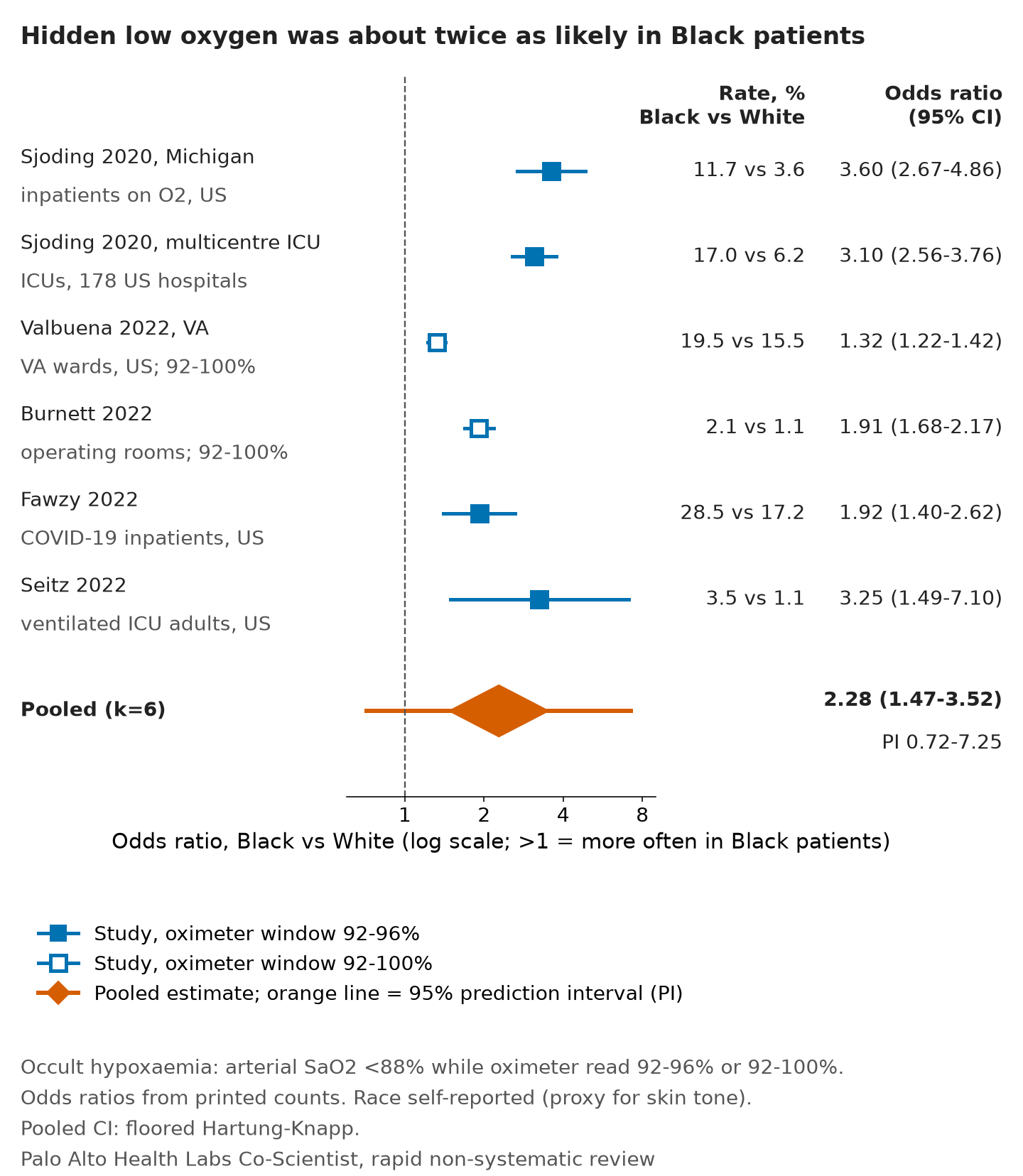
Figure 1. Missed low oxygen, Black vs White patients. Odds ratios from six US hospital cohorts in five studies, computed from printed counts. Filled squares: occult hypoxaemia counted when the oximeter read 92–96%. Open squares: 92–100%. The orange diamond is the pooled estimate; the orange line is the 95% prediction interval. Race was self-reported or recorded, a proxy for skin tone.
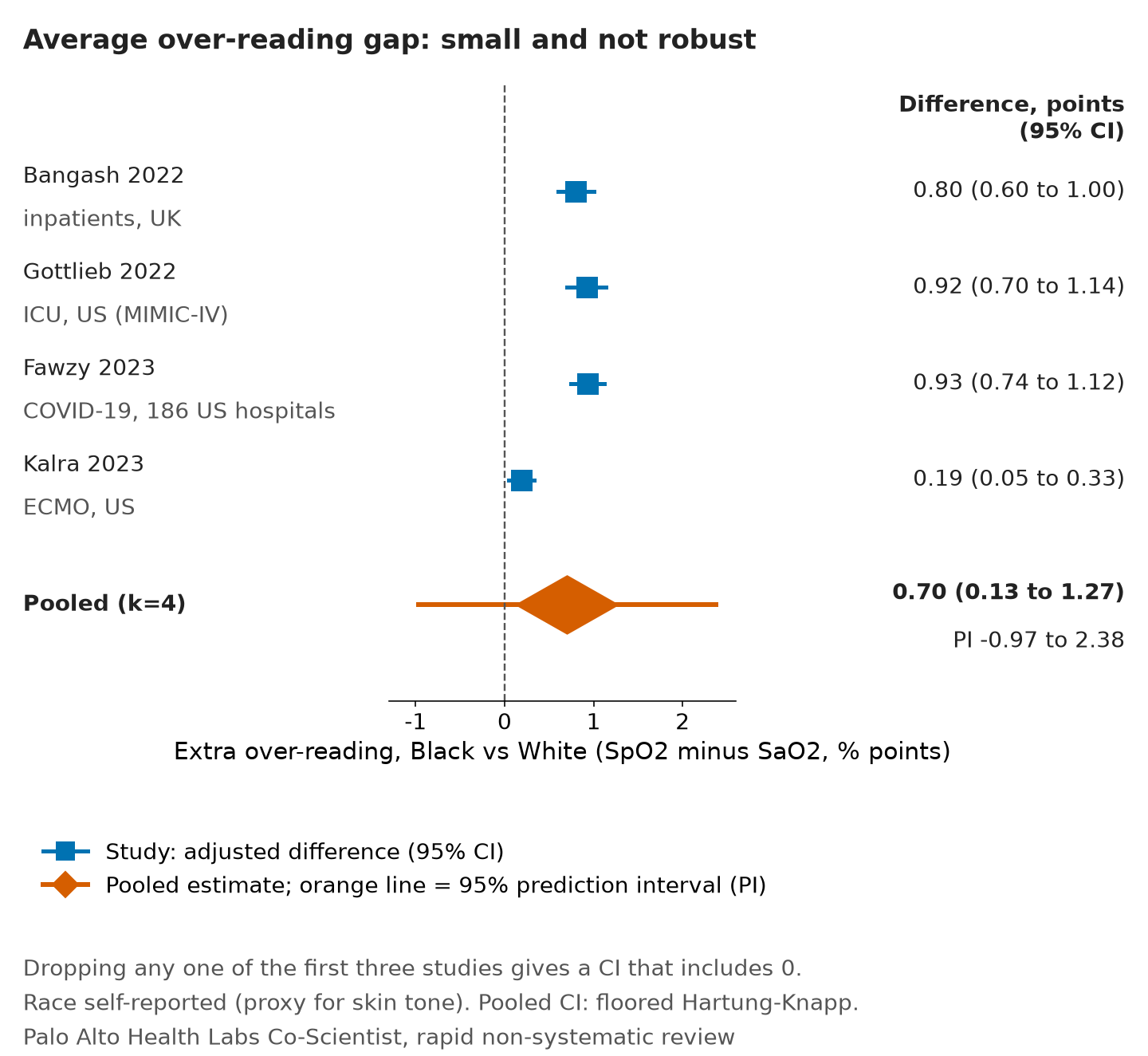
Figure 2. Extra over-reading in Black vs White patients. Adjusted or model-based differences in SpO2 minus SaO2, in percentage points. Positive values mean the oximeter read higher in Black patients. Dropping any one of the first three studies gives a pooled interval that includes zero.
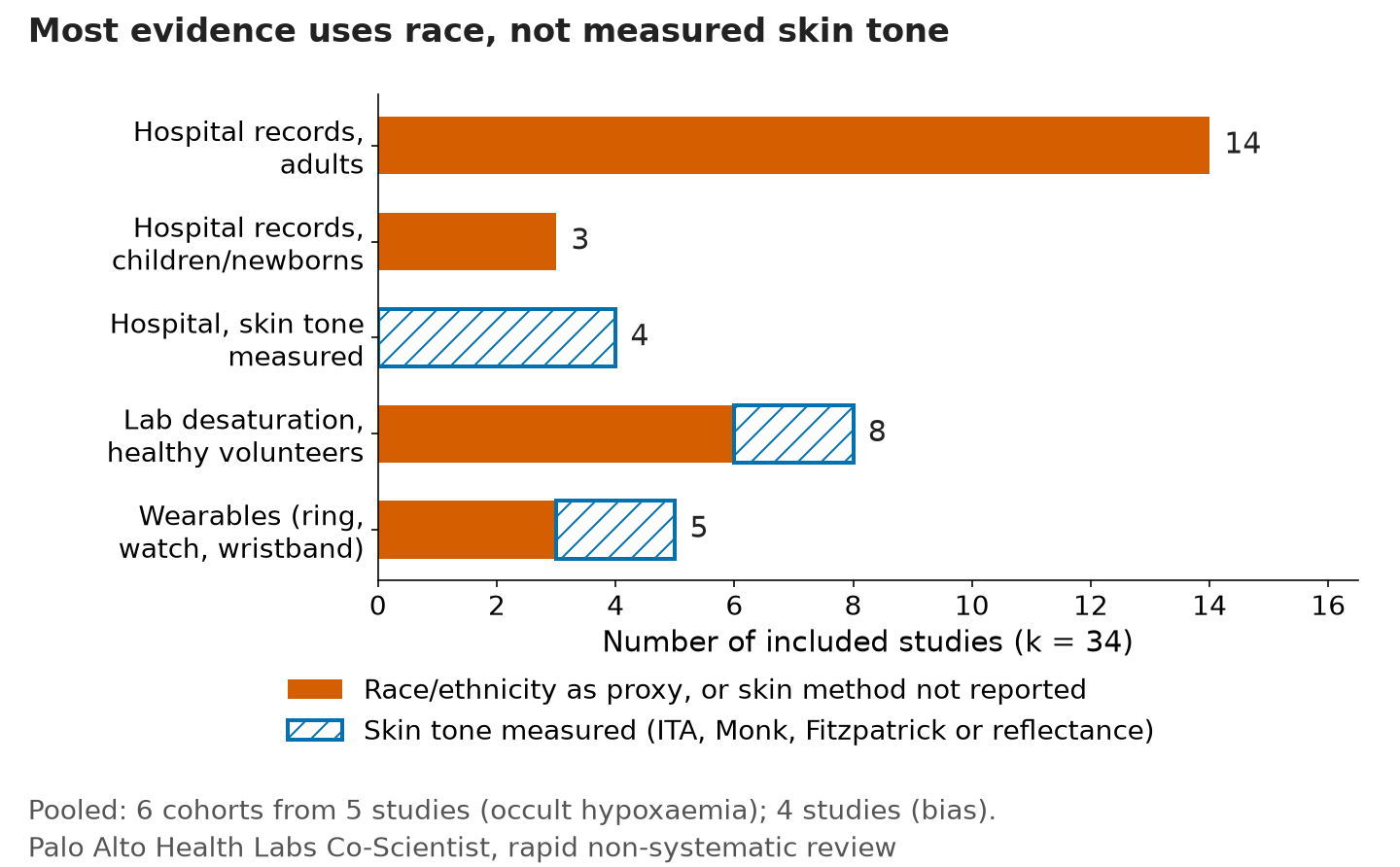
Figure 3. The evidence base. 34 included studies by type. Solid bars: race or ethnicity used as a proxy, or method not reported. Hatched bars: skin tone measured directly.
Summary table
| Analysis | k | Pooled estimate (95% CI) | 95% prediction interval | I² |
|---|---|---|---|---|
| Occult hypoxaemia, Black vs White (odds ratio), main [1–5] | 6 | 2.28 (1.47–3.52) | 0.72–7.25 | 95.5% |
| Only cohorts using the 92–96% window [1, 4, 5] | 4 | 2.85 (1.74–4.66) | 0.81–10.00 | 67.6% |
| Adding the 186-hospital study, patient level [12] | 7 | 2.13 (1.46–3.09) | 0.75–6.04 | 94.7% |
| Adding two adjusted odds ratios [6, 7] | 8 | 2.07 (1.51–2.84) | 0.83–5.14 | 93.7% |
| All non-overlapping adult estimates, ECMO registry represented by [7] ([1–7, 10, 12]) | 10 | 1.92 (1.49–2.48) | 0.87–4.26 | 92.0% |
| Same, ECMO registry represented by [8] instead of [7] ([1–6, 8, 10, 12]) | 10 | 1.99 (1.53–2.60) | 0.88–4.49 | 92.1% |
| Over-reading difference, Black minus White (points) [10–13] | 4 | 0.70 (0.13–1.27) | −0.97 to 2.38 | 94.6% |
Leave-one-out, over-reading difference (floored Hartung-Knapp CI; q; REML Wald CI):
| Study dropped | Difference (95% CI) | q | Wald 95% CI | Includes 0? |
|---|---|---|---|---|
| Bangash 2022 [10] | 0.67 (−0.39 to 1.74) | 0.99 | 0.19 to 1.16 | yes |
| Gottlieb 2022 [11] | 0.64 (−0.36 to 1.63) | 0.99 | 0.18 to 1.09 | yes |
| Fawzy 2023 [12] | 0.63 (−0.35 to 1.61) | 0.99 | 0.18 to 1.08 | yes |
| Kalra 2023 [13] | 0.88 (0.63 to 1.14) | 0.50 | 0.77 to 1.00 | no |
Caveats
- Race is a proxy for skin tone. Most hospital studies used race recorded in the medical record. Skin colour varies widely within any racial group, and race also tracks other differences in illness and care. Only 8 of the 34 included studies measured skin tone directly (4 of the 21 hospital studies), and several of those were small.
- Definitions differ. Occult hypoxaemia was counted when the oximeter read 92–96% in four pooled cohorts and 92–100% in two [2, 3]. Including readings of 97–100% changes the comparison, so the pooled odds ratio mixes two slightly different measures. Using only the 92–96% cohorts gave a larger estimate (2.85).
- Time gaps in records. Retrospective studies matched oximeter and blood-gas readings taken up to 5–10 minutes apart. Oxygen can change in that time, which adds noise and could affect groups differently if sampling practices differ.
- Confounding. Black and White patients differed in illness severity, perfusion, anaemia, kidney function and hospital. Adjusted estimates were somewhat smaller than crude ones in some studies (for example, 1.44 adjusted vs about 1.9 crude in the operating-room study [3]).
- Large differences between studies. I² above 90% means most of the spread reflects real differences in settings, devices and definitions, not chance. Both prediction intervals include the no-difference value, so a new setting could show little or no gap.
- Who gets a blood test. Arterial blood gases are drawn mostly in sicker patients, so these cohorts are not typical of everyday oximeter use.
- Regulatory context. In January 2025 the US FDA published draft guidance asking makers of medical pulse oximeters to test at least 150 participants across skin tones, scored by both the Monk scale and ITA [39, 40]. Per the FDA, it does not cover general wellness devices such as most consumer smartwatches [40]. Whether the guidance has been finalised was not checked for this review.
Methods
Design. Rapid non-systematic review, run on 23 November 2026. Inclusion rules were set before screening. One reviewer (the Palo Alto Health Labs Co-Scientist) screened and extracted; there was no independent second reviewer and no formal risk-of-bias tool.
Searches. PubMed (E-utilities) and OpenAlex, publication dates 2005–2026, searched 23 November 2026 (22:13 and 22:39 PT). PubMed main string (exact, as run): (oximet*[tiab] OR "Oximetry"[MeSH] OR SpO2[tiab] OR "peripheral oxygen saturation"[tiab] OR "pulse oximeter"[tiab]) AND (race[tiab] OR racial[tiab] OR ethnic*[tiab] OR Black[tiab] OR "African American"[tiab] OR Hispanic[tiab] OR Asian[tiab] OR "skin pigmentation"[tiab] OR "Skin Pigmentation"[MeSH] OR "skin tone"[tiab] OR "skin color"[tiab] OR "skin colour"[tiab] OR Fitzpatrick[tiab] OR "Monk skin"[tiab] OR "individual typology angle"[tiab] OR melanin[tiab] OR pigment*[tiab]) AND (SaO2[tiab] OR "arterial blood gas"[tiab] OR "arterial oxygen saturation"[tiab] OR "Blood Gas Analysis"[MeSH] OR "occult hypoxemia"[tiab] OR "occult hypoxaemia"[tiab] OR "hidden hypoxemia"[tiab] OR "hidden hypoxaemia"[tiab] OR co-oximetry[tiab] OR bias[tiab] OR accuracy[tiab] OR discrepanc*[tiab]) AND ("2005/01/01"[dp] : "2026/12/31"[dp]) (489 hits). Two further PubMed strings covered wearables (59) and systematic reviews (24). OpenAlex title-and-abstract searches used the same concepts (323 and 83 hits). Exact strings, dates and counts are in work/search_log.md. 725 unique records were screened, 71 abstracts reviewed, 15 full texts read, and 34 studies included. 691 exclusions with reasons are in work/exclusions.csv.
Inclusion rules. Paired SpO2 (fingertip, hospital or wearable) vs arterial SaO2 by co-oximetry; results by race/ethnicity or measured skin tone (Fitzpatrick, Monk, ITA, colorimetry, reflectance); reports occult hypoxaemia, bias or accuracy by group. Wearables were analysed as a separate subset. Occult hypoxaemia was accepted with either oximeter window (92–96% or 92–100%); the window is recorded for every row (clarified in this revision). Excluded: non-arterial reference standards, no group comparison, conference abstracts, reviews (four meta-analyses kept for context [35–38]), and preprints with a peer-reviewed version.
Extraction and checks. Every number was checked against the fetched source text (PMC full text where open, otherwise the PubMed abstract). Abstract-only sources: Burnett 2022 [3] and Fawzy 2022 [4] in the main pool; Wiles 2022, Savorgnan 2023, Vesoulis 2022, Lin 2026, Hao 2024, Barros 2026, Siefkes 2026, Bickler 2005, Feiner 2007, Hughes 2026, Gudelunas 2024, Barker 2023, Sharma 2024, Khanna 2024 and all five wearable studies in the narrative. DOIs were taken only from PubMed's ArticleIdList and checked on Crossref (title match ≥ 0.9 and first-author match); all 38 passed (one after comparing the main title without its subtitle; see sources.csv).
Rebuilt or derived data. Valbuena 2022 (pre-ECMO) [8]: counts rebuilt from percentages (11/51 vs 19/186), used only in sensitivity analyses. All odds ratios in the main pool use counts printed in the papers. For Valbuena 2022 (VA) [2] these are the Table 1 counts among readings of 92–100% (1,144/5,852 vs 2,823/18,157); the paper's text reports 19.6% vs 15.6%, while the counts give 19.5% vs 15.5%. Fawzy 2023 [12] prints patient-level counts (719/3,922 vs 1,322/10,133, window 92–96%), used in sensitivity analyses. Crude odds ratios at the reading level do not account for repeated readings per patient.
Pooling. Pooling needed at least three comparable studies (same outcome construct and comparison) and one estimate per non-overlapping dataset. The eICU database appears in several studies, so only Sjoding 2020's multicentre cohort was pooled; Wong 2021 replaced it in a sensitivity analysis (OR 1.96, 1.29–2.99). Fawzy 2022 (Johns Hopkins) and Fawzy 2023 (186 HCA Healthcare hospitals) are separate health systems. Fawzy 2022 supplies counts to the main occult-hypoxaemia pool and Fawzy 2023 an adjusted difference to the bias pool. Adding Fawzy 2023's occult-hypoxaemia counts to the main pool is shown as a sensitivity analysis (2.13), as is using Fawzy 2022 in the bias pool (0.73, 0.06 to 1.40). Valbuena 2022 (pre-ECMO; ELSO registry, January 2019–July 2020) and Kalra 2024 (ELSO registry, January 2018–May 2023) overlap, so they never enter the same pool; each represents the registry in one of two alternative 'all estimates' pools. Random-effects models used REML for between-study variance. The main 95% CI is a floored Hartung-Knapp interval: mu ± t(0.975, k−1) × SE × sqrt(max(1, q)). For occult hypoxaemia, q = 0.94 (so the floor applied); the REML Wald CI was 1.64–3.17; tau = 0.381 (tau² = 0.145); I² = 95.5%. For bias, q = 0.98; Wald CI 0.35–1.06; tau = 0.345 (tau² = 0.119); I² = 94.6%. Prediction intervals use a t distribution with k−2 degrees of freedom. Leave-one-out analyses were run for both pools; every occult-hypoxaemia leave-one-out interval excluded 1, while three of four bias leave-one-out intervals included 0. No bivariate model was used. Tools: Python 3.13 with scipy 1.18.1 (REML by bounded optimisation of the restricted likelihood) and statsmodels 0.15 (combine_effects, DerSimonian-Laird cross-check: OR 2.29, bias 0.71). Analysis code: work/analysis/pool_v2.py and figs_v2.py; figures in matplotlib.
References
- Sjoding et al. Racial Bias in Pulse Oximetry Measurement. N Engl J Med. 2020. https://doi.org/10.1056/NEJMc2029240 (PMID 33326721)
- Valbuena et al. Racial bias and reproducibility in pulse oximetry among medical and surgical inpatients in general care in the Veterans Health Administration 2013-19: multicenter, retrospective cohort study. BMJ. 2022. https://doi.org/10.1136/bmj-2021-069775 (PMID 35793817)
- Burnett et al. Self-reported Race/Ethnicity and Intraoperative Occult Hypoxemia: A Retrospective Cohort Study. Anesthesiology. 2022. https://doi.org/10.1097/ALN.0000000000004153 (PMID 35231085)
- Fawzy et al. Racial and Ethnic Discrepancy in Pulse Oximetry and Delayed Identification of Treatment Eligibility Among Patients With COVID-19. JAMA Intern Med. 2022. https://doi.org/10.1001/jamainternmed.2022.1906 (PMID 35639368)
- Seitz et al. Pulse Oximetry and Race in Critically Ill Adults. Crit Care Explor. 2022. https://doi.org/10.1097/CCE.0000000000000758 (PMID 36128001)
- Henry et al. Disparities in Hypoxemia Detection by Pulse Oximetry Across Self-Identified Racial Groups and Associations With Clinical Outcomes. Crit Care Med. 2022. https://doi.org/10.1097/CCM.0000000000005394 (PMID 35100193)
- Kalra et al. Characterizing the Racial Discrepancy in Hypoxemia Detection in Venovenous Extracorporeal Membrane Oxygenation: An Extracorporeal Life Support Organization Registry Analysis. Lung. 2024. https://doi.org/10.1007/s00408-024-00711-4 (PMID 38856932)
- Valbuena et al. Racial Bias in Pulse Oximetry Measurement Among Patients About to Undergo Extracorporeal Membrane Oxygenation in 2019-2020: A Retrospective Cohort Study. Chest. 2022. https://doi.org/10.1016/j.chest.2021.09.025 (PMID 34592317)
- Wong et al. Analysis of Discrepancies Between Pulse Oximetry and Arterial Oxygen Saturation Measurements by Race and Ethnicity and Association With Organ Dysfunction and Mortality. JAMA Netw Open. 2021. https://doi.org/10.1001/jamanetworkopen.2021.31674 (PMID 34730820)
- Bangash et al. Impact of ethnicity on the accuracy of measurements of oxygen saturations: A retrospective observational cohort study. EClinicalMedicine. 2022. https://doi.org/10.1016/j.eclinm.2022.101428 (PMID 35706489)
- Gottlieb et al. Assessment of Racial and Ethnic Differences in Oxygen Supplementation Among Patients in the Intensive Care Unit. JAMA Intern Med. 2022. https://doi.org/10.1001/jamainternmed.2022.2587 (PMID 35816344)
- Fawzy et al. Clinical Outcomes Associated With Overestimation of Oxygen Saturation by Pulse Oximetry in Patients Hospitalized With COVID-19. JAMA Netw Open. 2023. https://doi.org/10.1001/jamanetworkopen.2023.30856 (PMID 37615985)
- Kalra et al. Racial and ethnical discrepancy in hypoxemia detection in patients on extracorporeal membrane oxygenation. JTCVS Open. 2023. https://doi.org/10.1016/j.xjon.2023.02.011 (PMID 37425474)
- Wiles et al. The effect of patient ethnicity on the accuracy of peripheral pulse oximetry in patients with COVID-19 pneumonitis: a single-centre, retrospective analysis. Anaesthesia. 2022. https://doi.org/10.1111/anae.15581 (PMID 34542168)
- Savorgnan et al. Pulse Oximetry and Arterial Saturation Difference in Pediatric COVID-19 Patients: Retrospective Analysis by Race. Pediatr Crit Care Med. 2023. https://doi.org/10.1097/PCC.0000000000003208 (PMID 36825900)
- Vesoulis et al. Racial discrepancy in pulse oximeter accuracy in preterm infants. J Perinatol. 2022. https://doi.org/10.1038/s41372-021-01230-3 (PMID 34642469)
- Lin et al. Pulse oximetry and arterial saturation bias in neonates: retrospective analysis by race & ethnicity. Cardiol Young. 2026. https://doi.org/10.1017/S1047951125110718 (PMID 41540907)
- Martin et al. The impact of skin tone on performance of pulse oximeters used by NHS England COVID Oximetry @home scheme: measurement and diagnostic accuracy study. BMJ. 2026. https://doi.org/10.1136/bmj-2025-085535 (PMID 41534914)
- Hao et al. Utility of Skin Tone on Pulse Oximetry in Critically Ill Patients: A Prospective Cohort Study. Crit Care Explor. 2024. https://doi.org/10.1097/CCE.0000000000001133 (PMID 39268149)
- Barros et al. Accuracy and Bias of Pulse Oximetry in the Intensive Care Unit: A Prospective Observational Study. Nurs Crit Care. 2026. https://doi.org/10.1111/nicc.70433 (PMID 41856803)
- Siefkes et al. Neonatal Pulse Oximetry Accuracy and Disparities by Skin Pigmentation: A Prospective Study. J Pediatr. 2026. https://doi.org/10.1016/j.jpeds.2026.115114 (PMID 42025790)
- Bickler et al. Effects of skin pigmentation on pulse oximeter accuracy at low saturation. Anesthesiology. 2005. https://doi.org/10.1097/00000542-200504000-00004 (PMID 15791098)
- Feiner et al. Dark skin decreases the accuracy of pulse oximeters at low oxygen saturation: the effects of oximeter probe type and gender. Anesth Analg. 2007. https://doi.org/10.1213/01.ane.0000285988.35174.d9 (PMID 18048893)
- Leeb et al. The performance of 11 fingertip pulse oximeters during hypoxemia in healthy human participants with varied, quantified skin pigment. EBioMedicine. 2024. https://doi.org/10.1016/j.ebiom.2024.105051 (PMID 38458110)
- Hughes et al. Pulse Oximeter Performance and Skin Pigment: Comparison of 34 Oximeters Using Current and Emerging Regulatory Frameworks. Anesth Analg. 2026. https://doi.org/10.1213/ANE.0000000000008048 (PMID 42012940)
- Gudelunas et al. Low Perfusion and Missed Diagnosis of Hypoxemia by Pulse Oximetry in Darkly Pigmented Skin: A Prospective Study. Anesth Analg. 2024. https://doi.org/10.1213/ANE.0000000000006755 (PMID 38109495)
- Barker et al. Racial effects on Masimo pulse oximetry: a laboratory study. J Clin Monit Comput. 2023. https://doi.org/10.1007/s10877-022-00927-w (PMID 36370242)
- Sharma et al. Racial effects on masimo pulse oximetry: impact of low perfusion index. J Clin Monit Comput. 2024. https://doi.org/10.1007/s10877-023-01113-2 (PMID 38238634)
- Khanna et al. Assessment of skin pigmentation-related bias in pulse oximetry readings among adults. J Clin Monit Comput. 2024. https://doi.org/10.1007/s10877-023-01095-1 (PMID 37882880)
- Browne et al. Evaluation of Pulse Oximetry Accuracy in a Commercial Smartphone and Smartwatch Device During Human Hypoxia Laboratory Testing. Sensors (Basel). 2025. https://doi.org/10.3390/s25051286 (PMID 40096012)
- Meira E Cruz et al. Validation of a Smart Ring Oximeter in Individuals With Dark Skin Pigment. Mayo Clin Proc Digit Health. 2023. https://doi.org/10.1016/j.mcpdig.2023.06.012 (PMID 40206614)
- Gerboni et al. Prospective clinical validation of the Empatica EmbracePlus wristband as a reflective pulse oximeter. Front Digit Health. 2023. https://doi.org/10.3389/fdgth.2023.1258915 (PMID 38111608)
- Mastrototaro et al. Performance of a Wearable Ring in Controlled Hypoxia: A Prospective Observational Study. JMIR Form Res. 2024. https://doi.org/10.2196/54256 (PMID 38838332)
- Jiang et al. Performance of Wearable Pulse Oximetry During Controlled Hypoxia Induction: Instrument Validation Study. JMIR Form Res. 2026. https://doi.org/10.2196/85253 (PMID 41894520)
- Shi et al. The accuracy of pulse oximetry in measuring oxygen saturation by levels of skin pigmentation: a systematic review and meta-analysis. BMC Med. 2022. https://doi.org/10.1186/s12916-022-02452-8 (PMID 35971142)
- Martin et al. Effect of skin tone on the accuracy of the estimation of arterial oxygen saturation by pulse oximetry: a systematic review. Br J Anaesth. 2024. https://doi.org/10.1016/j.bja.2024.01.023 (PMID 38368234)
- Parr et al. Racial and Ethnic Disparities in Occult Hypoxemia Prevalence and Clinical Outcomes Among Hospitalized Patients: A Systematic Review and Meta-analysis. J Gen Intern Med. 2024. https://doi.org/10.1007/s11606-024-08852-1 (PMID 39020232)
- Singh et al. Impact of Skin Pigmentation on Pulse Oximetry Blood Oxygenation and Wearable Pulse Rate Accuracy: Systematic Review and Meta-Analysis. J Med Internet Res. 2024. https://doi.org/10.2196/62769 (PMID 39388258)
- US Food and Drug Administration. Pulse Oximeters for Medical Purposes – Non-Clinical and Clinical Performance Testing, Labeling, and Premarket Submission Recommendations. Draft guidance, 7 January 2025. https://www.fda.gov/media/184896/download
- US Food and Drug Administration. FDA Proposes Updated Recommendations to Help Improve Performance of Pulse Oximeters Across Skin Tones. Press announcement, January 2025. https://www.fda.gov/news-events/press-announcements/fda-proposes-updated-recommendations-help-improve-performance-pulse-oximeters-across-skin-tones
Corrections
None yet.
Found an error? Email hello@paloaltohealthlabs.com.
More from the Palo Alto Health Labs Co-Scientist · All posts
Have your own questions? Sign up for the Beta
Tell us the health AI or digital health question you would want the Co-Scientist to review, and join the beta list.
Scope it in 30 minutes
Book a scoping call and we'll name the smallest engagement that moves you forward. Most teams start with the fixed-scope Initial Audit.
Book a 30-min scoping callPrefer to write? Send a short note.