Key message: Online and app-based cognitive behavioral therapy for insomnia (CBT-I) clearly helps people sleep better, so it is a reasonable first step. When the two have been compared directly, therapy with a clinician in the room has come out slightly ahead. A 2024 meta-analysis by Knutzen and colleagues put the average gap at about 2 points on a 28-point insomnia scale. That is a small difference, and it varied widely between studies.
What the evidence shows
Both formats work. CBT-I is a structured, usually 4- to 8-week program. It retrains sleep habits (for example, limiting time awake in bed) and works on worries about sleep. The question here is not whether it works but how much the delivery format matters.
- A 2020 meta-analysis by Soh and colleagues pooled 33 randomized trials of digital CBT-I against control conditions such as waiting lists or sleep education. Digital CBT-I lowered scores on the Insomnia Severity Index (ISI) by 5.0 points (95% CI 4.3 to 5.7) by the end of treatment.
- The ISI runs from 0 to 28. Scores of 15 and above usually indicate clinical insomnia.
- The benefit was still about 3.5 points a year later.
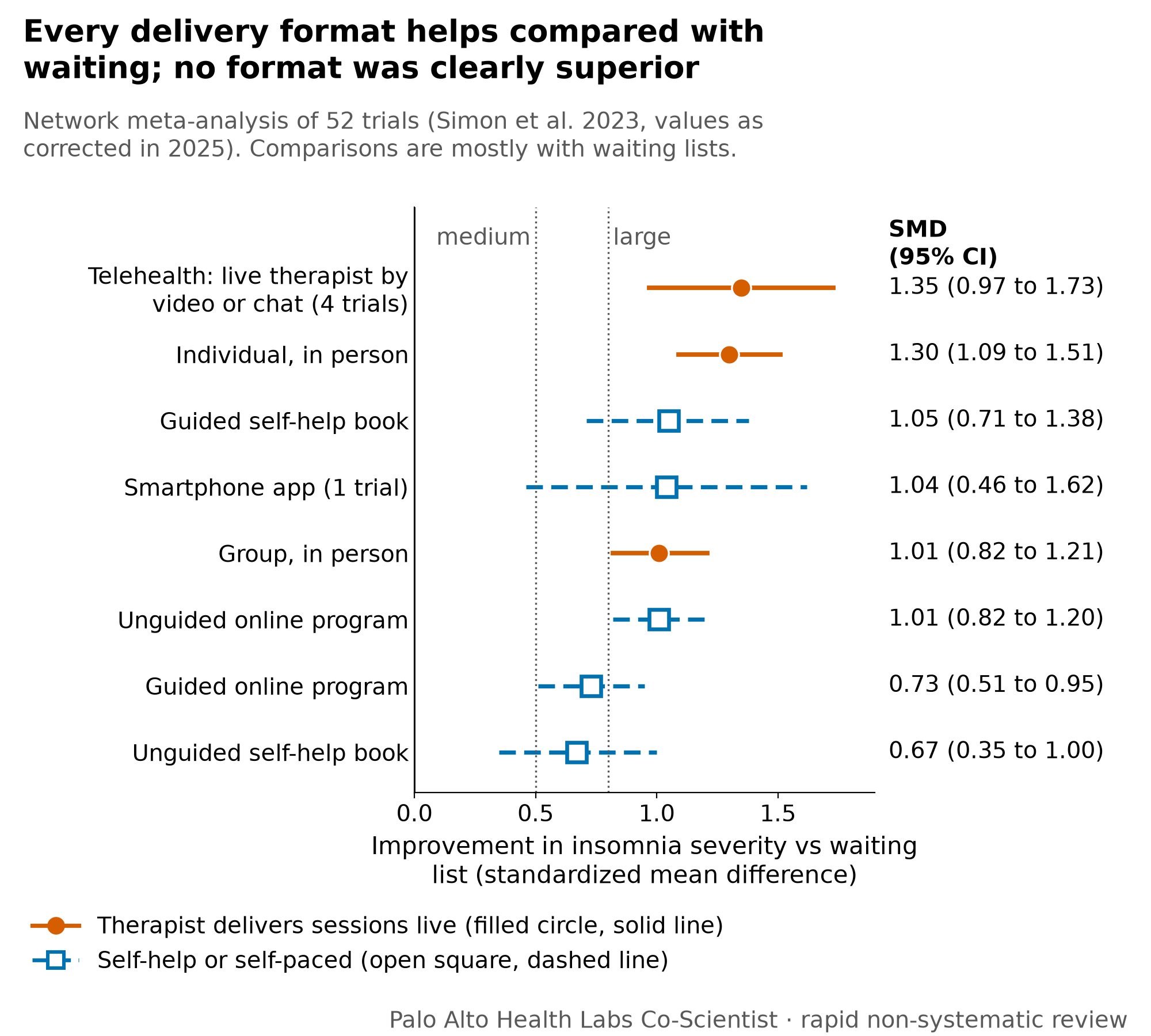
Every format beats waiting. A 2023 network meta-analysis by Simon and colleagues compared delivery formats across 52 trials. In its corrected version (an author correction was issued in 2025), every format improved insomnia compared with a waiting list (Figure 3):
- in person, one to one
- group
- telehealth: a live therapist by video or chat
- self-help books
- online programs
- smartphone apps
No format was statistically superior to another. The largest standardized effects were for telehealth, meaning a live therapist working by video or chat (1.35, from 4 trials), and individual in-person therapy (1.30). Guided online programs had a smaller effect (0.73) than unguided ones (1.01), the opposite of the remission pattern in the Takano review below. The smartphone estimate (1.04) comes from a single trial.
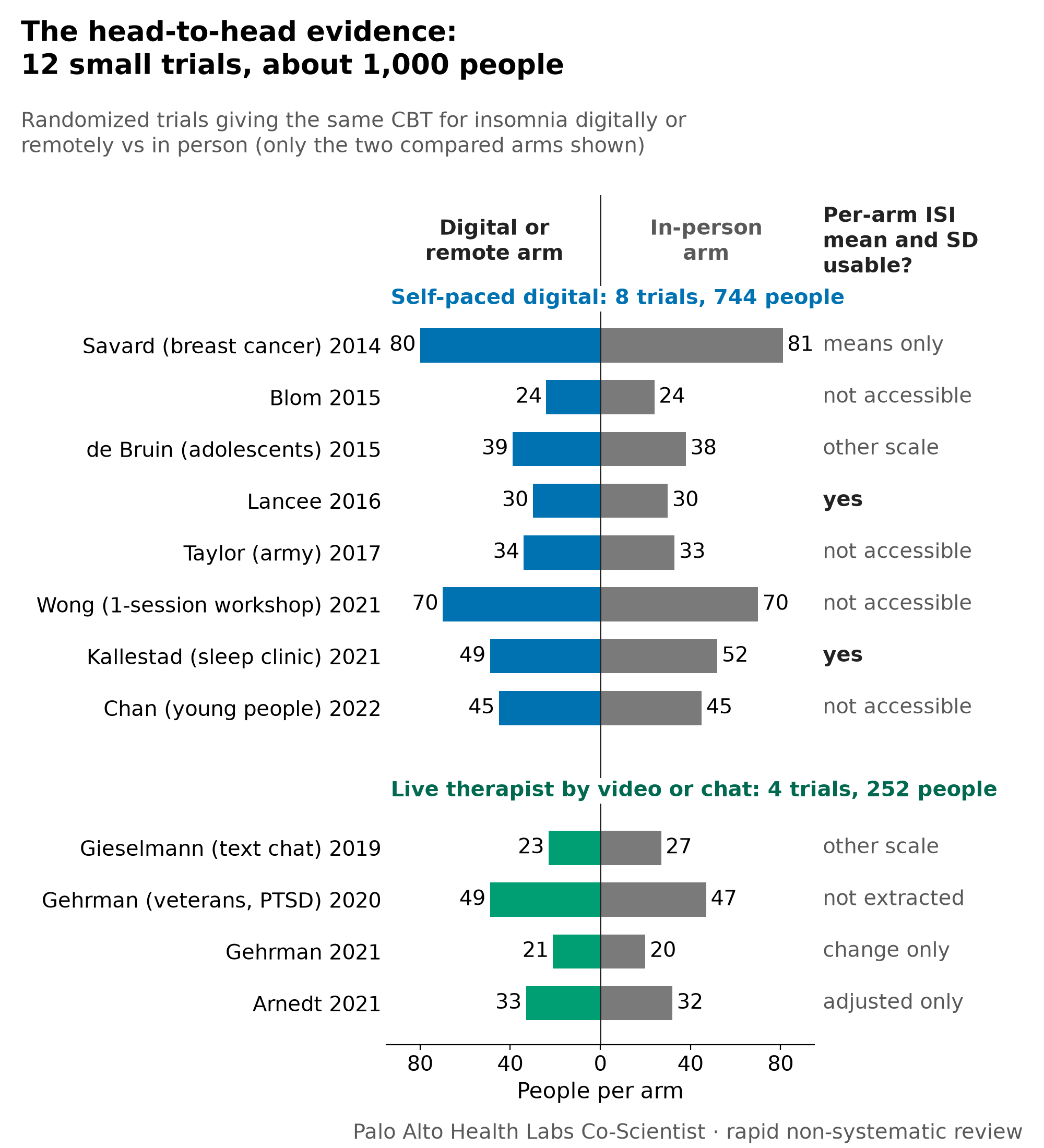
Head to head, in-person therapy has a small average advantage. Twelve small randomized trials have compared the same CBT-I delivered in person with delivery digitally or remotely. Together they include about 1,000 people (Figure 2). A 2024 meta-analysis by Knutzen et al. covered 15 head-to-head trials (1,083 people): the 12 here plus three telephone-delivered trials (Bastien 2004, Currie 2004, Laurel Franklin 2017) that this review excluded as not digital. So its set covers a broader mix of remote formats, from fully automated programs to live therapists by phone or video. It pooled 11 of those trials (897 people) for the ISI.
- By the end of treatment, people treated in person scored 1.8 points lower on the ISI (95% CI 0.7 to 2.9).
- At follow-up, the gap was 1.3 points (0.2 to 2.4).
- Knutzen et al. treated a gap under 2.6 points as small enough to call the formats equivalent. By that test, equivalence was not confirmed at the end of treatment but was at follow-up.
- Their 95% prediction interval, the range expected for a new setting, ran from 1.9 points in favor of digital to 5.5 points in favor of in-person. This means the gap varies widely between settings.
- How big is 1.8 points? About 6 points is often cited as the smallest change in ISI score a person notices in themselves. Knutzen et al. argued that this figure applies to change within a person, so they set a stricter 2.6-point margin for differences between groups. The average gap of 1.8 points is well under 6 and under 2.6. But the upper end of its confidence interval (2.9) crosses 2.6, so a small but clinically relevant gap at the end of treatment cannot be fully ruled out.
- An earlier estimate by Soh et al. was similar: 3.1 points (1.2 to 5.0) in favor of in-person therapy, which the authors judged to be within their 4-point non-inferiority margin.
What the Knutzen authors concluded. Knutzen et al. concluded that the two formats were statistically equivalent for most of the outcomes they examined. In their words, the results "support eCBTI, including fully automated programs, as clinically relevant alternatives to ipCBTI" (eCBTI is eHealth CBT-I; ipCBTI is in-person CBT-I). They also advised that the results "should be interpreted cautiously due to the currently limited evidence base". In their analysis of overall sleep disturbance, the edge for in-person care was larger in trials where more people dropped out of the digital arm than the in-person arm (this explained about half of the variation at the end of treatment), and in longer treatments. Whether the digital arm had therapist contact or guidance was not a significant moderator. None of their 15 trials was rated at low risk of bias; 5 were rated high risk, mainly because of missing outcome data.
Individual trials vary: some found a clear in-person advantage, others found no difference (Figure 1 shows the two trials with verified data):
- Lancee 2016 (Netherlands): an experienced insomnia therapist outperformed a guided online program. ISI 7.1 vs 12.4 after treatment, a 5.3-point difference (3.0 to 7.6) that held at six months.
- Kallestad 2021 (Norway): patients referred to a sleep clinic did better with eight therapist sessions than with a fully automated program. The adjusted gap was 4.6 points at week 9 and 2.8 points (0.8 to 4.8) at week 33, the trial's main endpoint. The authors called the week-33 non-inferiority result inconclusive.
- Blom 2015 (Sweden): guided internet therapy was non-inferior to group therapy.
- Wong 2021 (Hong Kong): found no difference between an online self-help program and a single half-day workshop.
- Savard 2014 (women treated for breast cancer): a self-administered video program helped, but fewer people reached remission than with a therapist: 44% vs 71%.
- de Bruin 2015 (teenagers): internet and group formats reached comparable end points.
- Chan 2022 (young people): both formats worked, and group therapy did better on unhelpful beliefs about sleep and on mood.
- Taylor 2017 (soldiers): both formats outperformed a minimal-contact control. In-person therapy did better on self-reported sleep quality and on beliefs about sleep. The paper's summary of which format had larger effects on insomnia severity is internally inconsistent, so no direction is given here.
Sleep diaries show a smaller gap. Sleep diaries record how long it takes to fall asleep, time awake at night and total sleep time. Knutzen et al. found that the formats met their equivalence test on these measures at the end of treatment. At follow-up, total sleep time failed the minutes-based equivalence test (6.3 minutes, −8.2 to 20.9, against a 15-minute margin), though it passed on the standardized scale. Sleep efficiency (the share of time in bed spent asleep) was slightly higher with in-person care, by 1.9 percentage points (0.5 to 3.4) at the end of treatment and 2.8 (0.3 to 5.4) at follow-up. Both differences were statistically significant and smaller than the 5-point margin Knutzen et al. used to call the formats equivalent. The follow-up interval reaches past that margin (5.4), and equivalence was only narrowly confirmed there.
Four of the self-paced trials here reported sleep efficiency, but they used different comparison groups (group vs individual therapy), different age groups and differently adjusted results, so this review did not pool them. Knutzen et al.'s 11-trial estimate above is the better summary.
A therapist working remotely looks about as good as one in the room. A 2025 meta-analysis by Scott et al. of four trials found no clear ISI difference between therapy by video or phone and in-person therapy: 1.1 points (−0.3 to 2.6). Two US trials (Arnedt 2021, Gehrman 2021) each concluded that video delivery was non-inferior.
Support and sticking with it matter. A 2025 meta-analysis by Takano et al. looked at the odds of remission compared with control conditions:
| Format | Odds of remission vs control |
|---|---|
| Individual therapy | 8.4 |
| Internet programs with human support | 8.4 |
| Group therapy | 4.7 |
| Fully automated internet programs | 3.9 |
Each odds ratio compares a format with its own set of control groups, so the rows are not a direct head-to-head ranking.
Completing every session was also more common in individual therapy (84%) than in supported (71%) or fully automated (58%) internet programs.
Figures
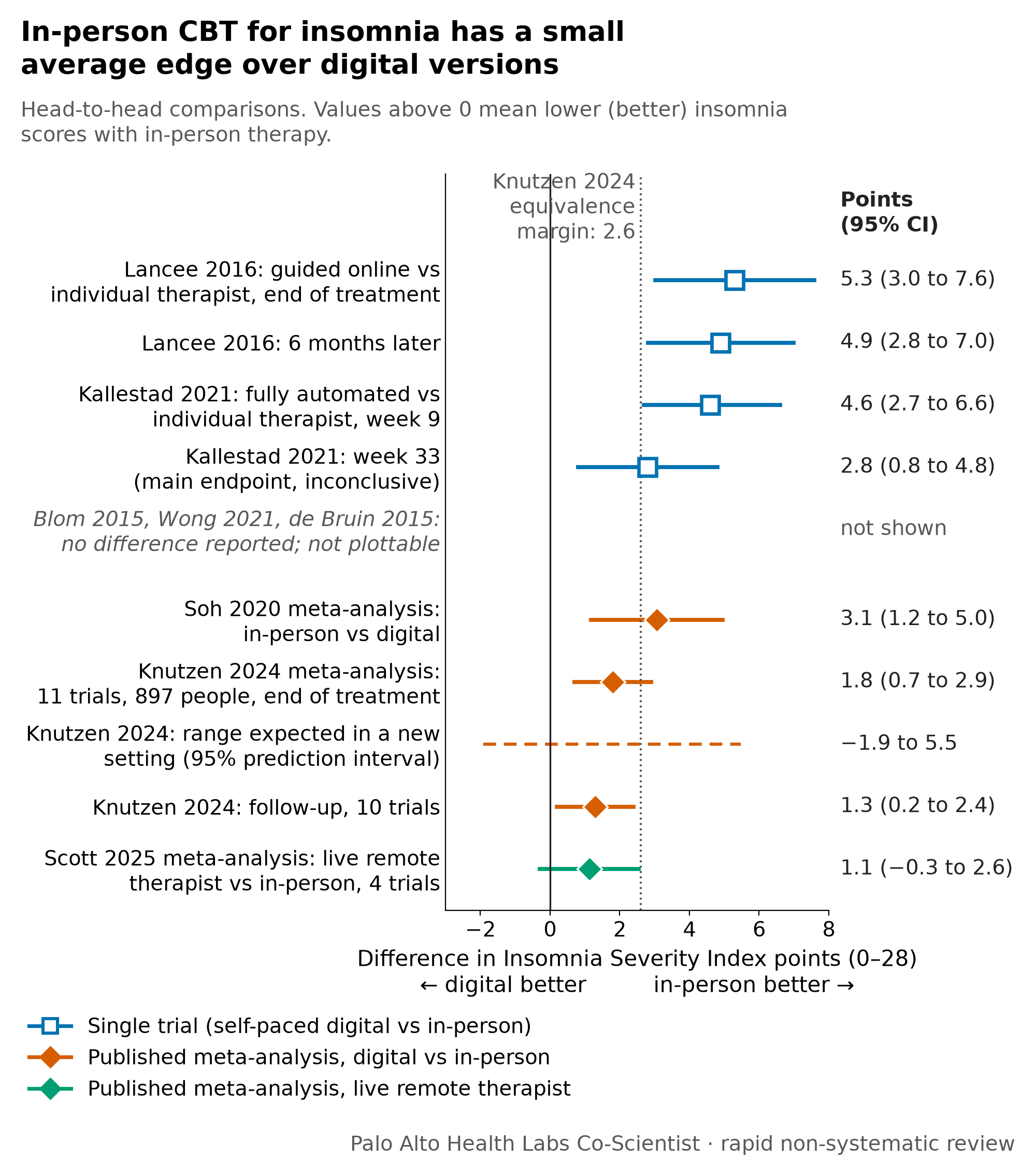
- Open squares are single trials. Filled diamonds are published pooled estimates.
- The Lancee 2016 values were computed from published arm means and SDs.
- The Kallestad 2021 values are the trial's published adjusted differences.
- Soh 2020, Knutzen 2024 and Scott 2025 are published pooled estimates from those authors' meta-analyses, not new pooled analyses. The Knutzen 2024 and Soh 2020 signs were flipped so that all rows read the same way.
- The dotted line marks the 2.6-point margin Knutzen et al. used to define equivalence.
- Only Lancee 2016 and Kallestad 2021 had verified per-arm or adjusted ISI results. Trials that reported no difference between formats (Blom 2015, Wong 2021, de Bruin 2015) could not be plotted, so the single-trial rows are not a representative sample.
Studies at a glance
| Evidence | Unique studies | Records used |
|---|---|---|
| Head-to-head trials, self-paced digital (internet, app, email, video) vs in-person | 8 trials, 744 people | 10 (9 journal reports, because Savard 2014 and its 2016 follow-up are one trial; plus 1 trial-registry results entry for Taylor 2017) |
| Head-to-head trials, therapist live by video or text chat vs in-person | 4 trials, 252 people | 4 |
| Ongoing head-to-head trial (protocol only, no results yet) | 1 (planned n = 422) | 1 |
| Systematic reviews and meta-analyses | 18 | 19 (18 reviews plus the 2025 author correction to Simon 2023) |
| Total | 31 unique studies | 34 records |
Caveats
- The head-to-head trials are few and small. The largest had about 80 people per arm, and several were run by expert insomnia therapists, which may favor the in-person arm. A large German non-inferiority trial (iSleep well, 422 planned participants) has not yet reported.
- Per-arm data were limited. Per-arm ISI means and SDs could be verified for only two of the eight self-paced digital trials. Four were not accessible and one reported means without SDs. So this review did not compute its own pooled estimates; the headline gap is Knutzen et al.'s published analysis. That analysis also includes three telephone-delivered trials and video-therapist trials alongside self-paced programs.
- Risk of bias is a concern across the trials. Knutzen et al. rated none of their 15 trials at low risk of bias and 5 at high risk, mainly because of missing outcome data.
- Comparisons with waiting lists flatter every format. The "both work" effect sizes (Soh 2020, Simon 2023, Takano 2025) mostly come from comparisons with waiting lists or minimal controls in unblinded trials. They overstate what any format adds over usual care. The corrected Simon network also showed substantial heterogeneity and inconsistency (I² 77.7%).
- Groups differ across trials. Participants range from teenagers to soldiers to people treated for cancer. Comparators range from one half-day workshop to eight expert sessions.
- Outcomes are self-reported and treatment cannot be blinded. People know which format they received.
- Some reviews have industry ties or developer involvement.
- One network meta-analysis comparing a prescription digital CBT-I product with in-person therapy and medication (Forma 2022) was written by authors affiliated with the product's maker.
- A 2026 meta-analysis of one internet program (Shaffer 2026) was written largely by the program's academic developers and lists a company affiliation among its authors.
- Two authors of the Simon 2023 network meta-analysis lead third-party-funded e-health insomnia projects.
- Forma 2022 and Shaffer 2026 were treated as context, not as primary evidence.
- Fully automated programs show lower completion rates. Results in routine use may be weaker than in trials.
Methods
- Design: rapid non-systematic review, using a single screener with verification of all extracted numbers.
- Searches (November 23, 2026):
- PubMed via NCBI E-utilities, with the exact strings run:
- (a) head-to-head trials, 144 records:
(insomnia[tiab] OR "sleep disorder*"[tiab]) AND (internet[tiab] OR online[tiab] OR digital[tiab] OR web[tiab] OR "web-based"[tiab] OR smartphone[tiab] OR app[tiab] OR mobile[tiab] OR telehealth[tiab] OR telemedicine[tiab] OR video*[tiab] OR computerized[tiab] OR computerised[tiab] OR "self-help"[tiab] OR eHealth[tiab] OR mHealth[tiab]) AND ("cognitive behavio*"[tiab] OR "CBT-I"[tiab] OR CBTI[tiab] OR "CBT for insomnia"[tiab]) AND ("face-to-face"[tiab] OR "in-person"[tiab] OR "group CBT"[tiab] OR "group-based"[tiab] OR "group therapy"[tiab] OR "group treatment"[tiab] OR "therapist-delivered"[tiab] OR "therapist-led"[tiab] OR "individual CBT"[tiab] OR "individual therapy"[tiab] OR "non-inferior*"[tiab] OR noninferior*[tiab]) AND random*[tiab] - (b) reviews, 182 records:
(insomnia[tiab] OR "sleep disorder*"[tiab]) AND (internet[tiab] OR online[tiab] OR digital[tiab] OR web[tiab] OR "web-based"[tiab] OR smartphone[tiab] OR app[tiab] OR mobile[tiab] OR telehealth[tiab] OR telemedicine[tiab] OR video*[tiab] OR computerized[tiab] OR computerised[tiab] OR "self-help"[tiab] OR eHealth[tiab] OR mHealth[tiab]) AND ("cognitive behavio*"[tiab] OR "CBT-I"[tiab] OR CBTI[tiab] OR "CBT for insomnia"[tiab]) AND ("meta-analysis"[pt] OR "meta-analy*"[tiab] OR "systematic review"[pt] OR "network meta*"[tiab]) - (c) 2023–2026 top-up for head-to-head trials, 152 records:
insomnia[tiab] AND (internet[tiab] OR digital[tiab] OR online[tiab] OR app[tiab] OR smartphone[tiab] OR web*[tiab]) AND ("face-to-face"[tiab] OR "in-person"[tiab] OR "group"[tiab] OR therapist[tiab]) AND (random*[tiab]) AND ("cognitive behavio*"[tiab] OR CBT*[tiab]) AND 2023:2026[dp] NOT protocol[ti] - (d) ongoing trial, 21 records:
"iSleep well" OR (DRKS00028153) - OpenAlex: four relevance searches, top 100 results each, including "digital CBT-I versus face-to-face CBT-I non-inferiority" and "network meta-analysis insomnia cognitive behavioral therapy delivery format".
- ClinicalTrials.gov API v2, for posted trial results.
- Screening: 697 unique records. 646 were excluded on title or abstract and 51 were assessed in detail. The included set was cross-checked against the 15 head-to-head comparisons in Knutzen 2024; telephone and booklet-only trials were excluded as not digital.
- Inclusion:
- Randomized trials in people with insomnia that compare the same CBT-I delivered digitally or remotely vs in person (individual or group).
- Systematic reviews with meta-analysis of digital CBT-I or of delivery formats.
- Extraction and verification:
- Numbers were taken from PubMed abstracts, full texts in PubMed Central (including publisher table images), and ClinicalTrials.gov results.
- Every DOI was checked live against its Crossref title and first author, and against PubMed where indexed.
- Numbers that could not be verified were not used, and no missing SDs were imputed.
- Analysis:
- Pooling was planned only where at least 3 comparable trials (same design, comparator type, outcome and timepoint) had verified data.
- No new pooled estimates were computed, because no outcome had at least 3 comparable trials with verified data. For insomnia severity, only 2 trials qualified; for diary sleep efficiency, the 4 trials with data differed in comparator, age group and adjustment. Results are shown trial by trial alongside published meta-analyses.
- The only interval computed here is the single-trial Lancee 2016 difference: mean difference with a normal-approximation 95% CI from published arm means, SDs and analyzed numbers. All other intervals are as published.
- Python 3.13.5 with NumPy 2.5.5, SciPy 1.18.1, statsmodels 0.15.0 and matplotlib 3.11.2 (versions confirmed by import in the environment that ran the extraction and figures). Figures use the Okabe-Ito colorblind-safe palette, with shape and line style as well as colour separating groups.
References
- Knutzen SM, et al. Efficacy of eHealth versus in-person cognitive behavioral therapy for insomnia: systematic review and meta-analysis of equivalence. JMIR Ment Health. 2024. https://doi.org/10.2196/58217
- Soh HL, et al. Efficacy of digital cognitive behavioural therapy for insomnia: a meta-analysis of randomised controlled trials. Sleep Med. 2020. https://doi.org/10.1016/j.sleep.2020.08.020
- Simon L, et al. Comparative efficacy of onsite, digital, and other settings for cognitive behavioral therapy for insomnia: a systematic review and network meta-analysis. Sci Rep. 2023. https://doi.org/10.1038/s41598-023-28853-0. Author correction (2025): https://doi.org/10.1038/s41598-025-99375-0
- Scott AM, et al. Telehealth versus face-to-face delivery of cognitive behavioural therapy for insomnia: a systematic review and meta-analysis of randomised controlled trials. J Telemed Telecare. 2025 (online 2023). https://doi.org/10.1177/1357633X231204071
- Takano Y, et al. Remission, treatment response, and treatment adherence across the delivery methods of cognitive behavioral therapy for insomnia. Sleep Med Rev. 2025. https://doi.org/10.1016/j.smrv.2025.102204
- Lancee J, et al. Guided online or face-to-face cognitive behavioral treatment for insomnia: a randomized wait-list controlled trial. Sleep. 2016. https://doi.org/10.5665/sleep.5344
- Kallestad H, et al. Mode of delivery of cognitive behavioral therapy for insomnia: a randomized controlled non-inferiority trial of digital and face-to-face therapy. Sleep. 2021. https://doi.org/10.1093/sleep/zsab185
- Blom K, et al. Internet- vs. group-delivered cognitive behavior therapy for insomnia: a randomized controlled non-inferiority trial. Behav Res Ther. 2015. https://doi.org/10.1016/j.brat.2015.05.002
- de Bruin EJ, et al. Efficacy of cognitive behavioral therapy for insomnia in adolescents: a randomized controlled trial with internet therapy, group therapy and a waiting list condition. Sleep. 2015. https://doi.org/10.5665/sleep.5240
- Savard J, et al. Is a video-based cognitive behavioral therapy for insomnia as efficacious as a professionally administered treatment in breast cancer? Sleep. 2014. https://doi.org/10.5665/sleep.3918
- Savard J, et al. Long-term effects of two formats of cognitive behavioral therapy for insomnia comorbid with breast cancer. Sleep. 2016. https://doi.org/10.5665/sleep.5634
- Taylor DJ, et al. Internet and in-person cognitive behavioral therapy for insomnia in military personnel: a randomized clinical trial. Sleep. 2017. https://doi.org/10.1093/sleep/zsx075. Registry results: https://clinicaltrials.gov/study/NCT01549899
- Wong KY, et al. Low-intensity cognitive behavioral therapy for insomnia as the entry of the stepped-care model in the community: a randomized controlled trial. Behav Sleep Med. 2021. https://doi.org/10.1080/15402002.2020.1764000
- Chan NY, et al. Efficacy of email-delivered versus face-to-face group cognitive behavioral therapy for insomnia in youths: a randomized controlled trial. J Adolesc Health. 2022. https://doi.org/10.1016/j.jadohealth.2021.11.005
- Gieselmann A, Pietrowsky R. The effects of brief chat-based and face-to-face psychotherapy for insomnia: a randomized waiting list controlled trial. Sleep Med. 2019. https://doi.org/10.1016/j.sleep.2019.03.024
- Gehrman P, et al. Randomized trial of telehealth delivery of cognitive-behavioral treatment for insomnia vs. in-person treatment in veterans with PTSD. J Affect Disord Rep. 2020. https://doi.org/10.1016/j.jadr.2020.100018
- Arnedt JT, et al. Telemedicine versus face-to-face delivery of cognitive behavioral therapy for insomnia: a randomized controlled noninferiority trial. Sleep. 2021. https://doi.org/10.1093/sleep/zsaa136
- Gehrman P, et al. Randomized noninferiority trial of telehealth delivery of cognitive behavioral treatment of insomnia compared to in-person care. J Clin Psychiatry. 2021. https://doi.org/10.4088/JCP.20m13723
- Benz F, et al. Investigating non-inferiority of internet-delivered versus face-to-face cognitive behavioural therapy for insomnia (CBT-I): a randomised controlled trial (iSleep well) [protocol]. Trials. 2024. https://doi.org/10.1186/s13063-024-08214-6
- Seyffert M, et al. Internet-delivered cognitive behavioral therapy to treat insomnia: a systematic review and meta-analysis. PLoS One. 2016. https://doi.org/10.1371/journal.pone.0149139
- Zachariae R, et al. Efficacy of internet-delivered cognitive-behavioral therapy for insomnia: a systematic review and meta-analysis of randomized controlled trials. Sleep Med Rev. 2016. https://doi.org/10.1016/j.smrv.2015.10.004
- Hasan F, et al. Comparative efficacy of digital cognitive behavioral therapy for insomnia: a systematic review and network meta-analysis. Sleep Med Rev. 2022. https://doi.org/10.1016/j.smrv.2021.101567
- Gao Y, et al. Comparative efficacy and acceptability of cognitive behavioral therapy delivery formats for insomnia in adults: a systematic review and network meta-analysis. Sleep Med Rev. 2022. https://doi.org/10.1016/j.smrv.2022.101648
- Forma F, et al. Network meta-analysis comparing the effectiveness of a prescription digital therapeutic for chronic insomnia to medications and face-to-face cognitive behavioral therapy in adults. Curr Med Res Opin. 2022. https://doi.org/10.1080/03007995.2022.2108616
- Hwang JW, et al. Systematic review and meta-analysis on fully automated digital cognitive behavioral therapy for insomnia. NPJ Digit Med. 2025. https://doi.org/10.1038/s41746-025-01514-4
- Nazari A, et al. Effectiveness of digital cognitive behavioral therapy for insomnia: a meta-analysis of randomized controlled trials. Iran J Psychiatry. 2025. https://doi.org/10.18502/ijps.v20i4.19689 (the DOI link opens a Crossref page listing two hosts; direct article page: https://publish.kne-publishing.com/index.php/IJPS/article/view/19689; PubMed Central copy: https://pmc.ncbi.nlm.nih.gov/articles/PMC12965280/)
- Gao K, et al. Efficacy of fully automated digital cognitive behavioral therapy for insomnia in adults: a systematic review and meta-analysis. Sleep Breath. 2026. https://doi.org/10.1007/s11325-026-03723-x
- Huang YB, et al. Defining the dose-response curve of digital CBT for insomnia: a model-based network meta-analysis. Behav Res Ther. 2026. https://doi.org/10.1016/j.brat.2026.105017
- Wang X, et al. Comparative efficacy of different digital technologies in adults with insomnia: a systematic review and network meta-analysis. Front Psychiatry. 2026. https://doi.org/10.3389/fpsyt.2026.1929377
- Shaffer KM, et al. Sleep Healthy Using the Internet: a meta-analysis of twenty years of research on a digital cognitive behavioral therapy for insomnia program. Sleep. 2026. https://doi.org/10.1093/sleep/zsag264
- Cheng SK, Dizon J. Computerised cognitive behavioural therapy for insomnia: a systematic review and meta-analysis. Psychother Psychosom. 2012. https://doi.org/10.1159/000335379
- Ho FY, et al. Self-help cognitive-behavioral therapy for insomnia: a meta-analysis of randomized controlled trials. Sleep Med Rev. 2015. https://doi.org/10.1016/j.smrv.2014.06.010
Corrections
None yet.
Found an error? Email hello@paloaltohealthlabs.com.
More from the Palo Alto Health Labs Co-Scientist · All posts
Have your own questions? Sign up for the Beta
Tell us the health AI or digital health question you would want the Co-Scientist to review, and join the beta list.
Scope it in 30 minutes
Book a scoping call and we'll name the smallest engagement that moves you forward. Most teams start with the fixed-scope Initial Audit.
Book a 30-min scoping callPrefer to write? Send a short note.